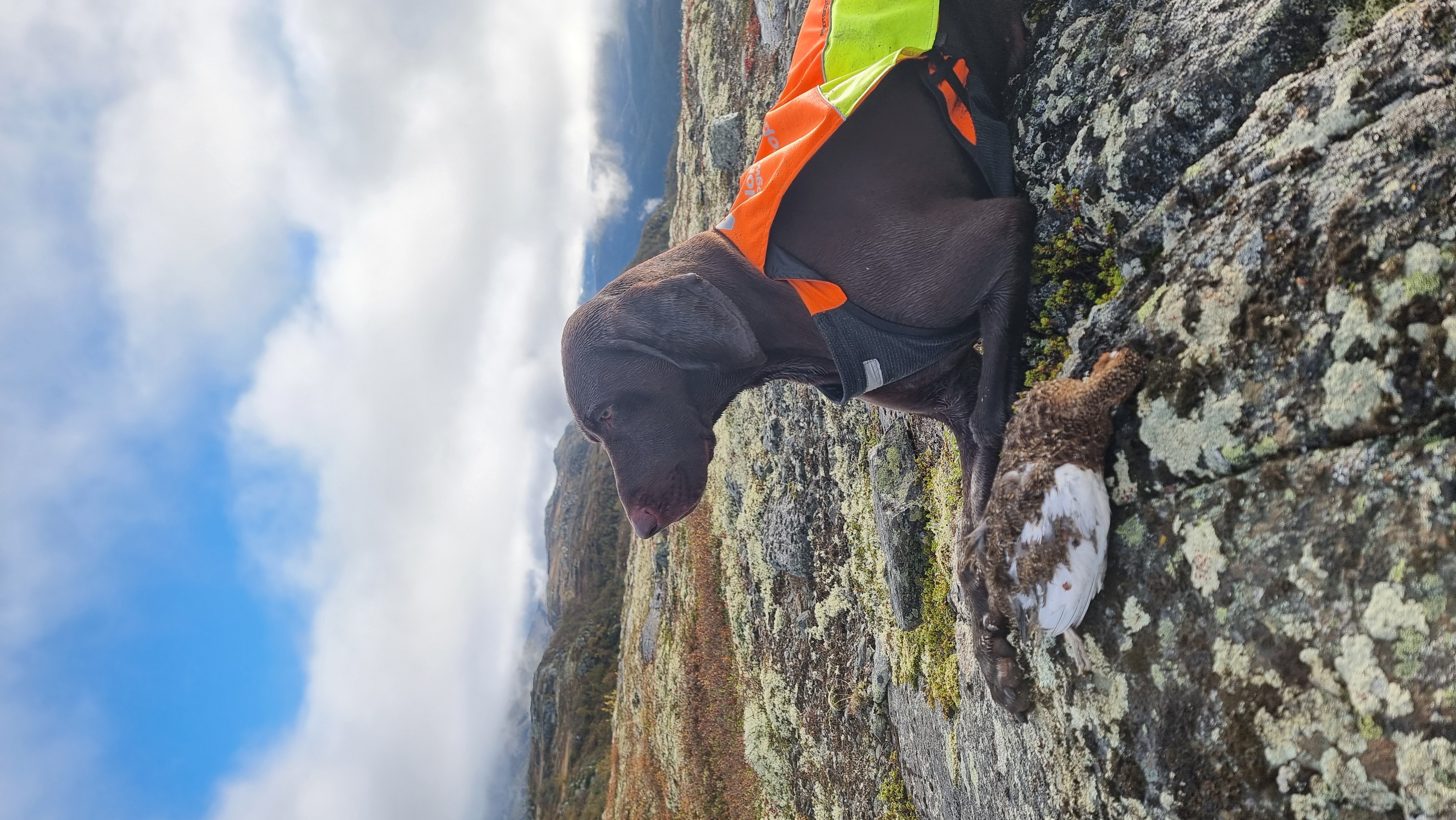
Understanding Working Bird Dogs
The German Shorthaired Pointer is one of the most versatile hunting breeds in the world. Originally developed in Germany in the 1800s, they were bred to be an "all-around" gun dog—pointing, retrieving, tracking, and working on both land and water.
They're not a breed for everyone—they need work, exercise, and mental stimulation—but for someone who hunts regularly and wants a dog who's as passionate about it as they are, the GSP is unmatched.
Not every GSP is a great hunting dog, and not every hunting dog fits every style. Here's what I look for:
The desire to hunt is instinctive, but the intensity varies. I want a dog who's eager to get out, covers ground, and doesn't quit.
Scenting ability is everything. A dog with a strong nose can find birds others miss and work scent efficiently.
Some GSPs point naturally at 8 weeks. Others need encouragement. I want a dog who points with confidence and style.
Intelligence and eagerness to please. A dog who listens, responds, and wants to work with me, not despite me.
Ptarmigan hunting is physically demanding. The dog needs endurance, resilience, and the ability to recover quickly.
Stable, confident, not aggressive or fearful. A dog who's calm at home and fierce in the field.
The Norwegian mountains aren't easy terrain. Rocky ground, steep climbs, unpredictable weather, and altitudes that test both dog and human.
The GSP's short coat handles wet conditions better than feathered breeds. Their build is athletic but not fragile. They have the range to cover big country without getting lost, and the intelligence to adjust to terrain and weather.
They're also incredibly versatile—Brage is equally comfortable retrieving ducks from cold water in spring as he is working ptarmigan at 1,500 meters in autumn.
For my style of hunting and the landscape I work in, the GSP is a perfect fit.